🏛
Explore Castro Pretorio's monuments and local tips insideRioneThe Living Map of Rome
Open the interactive guide
Rione — explore Rome's rioni
ROME · LIVING RIONI

Experience Roman life like Romans do. Discover the rioni.

Uncover the city’s living history. Rione maps Rome’s ancient quarters dynamically — unlocking subterranean layers, hidden stories and local secrets right where you stand.

Open the free Castro Pretorio guide →

Inside the Rione app

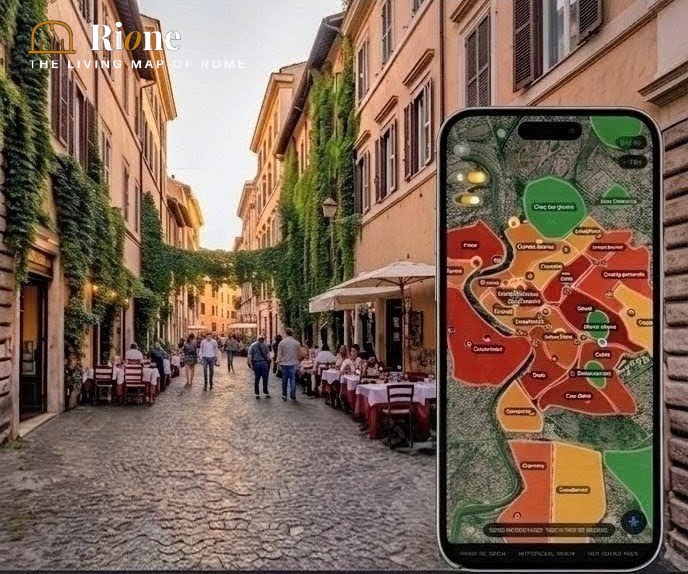
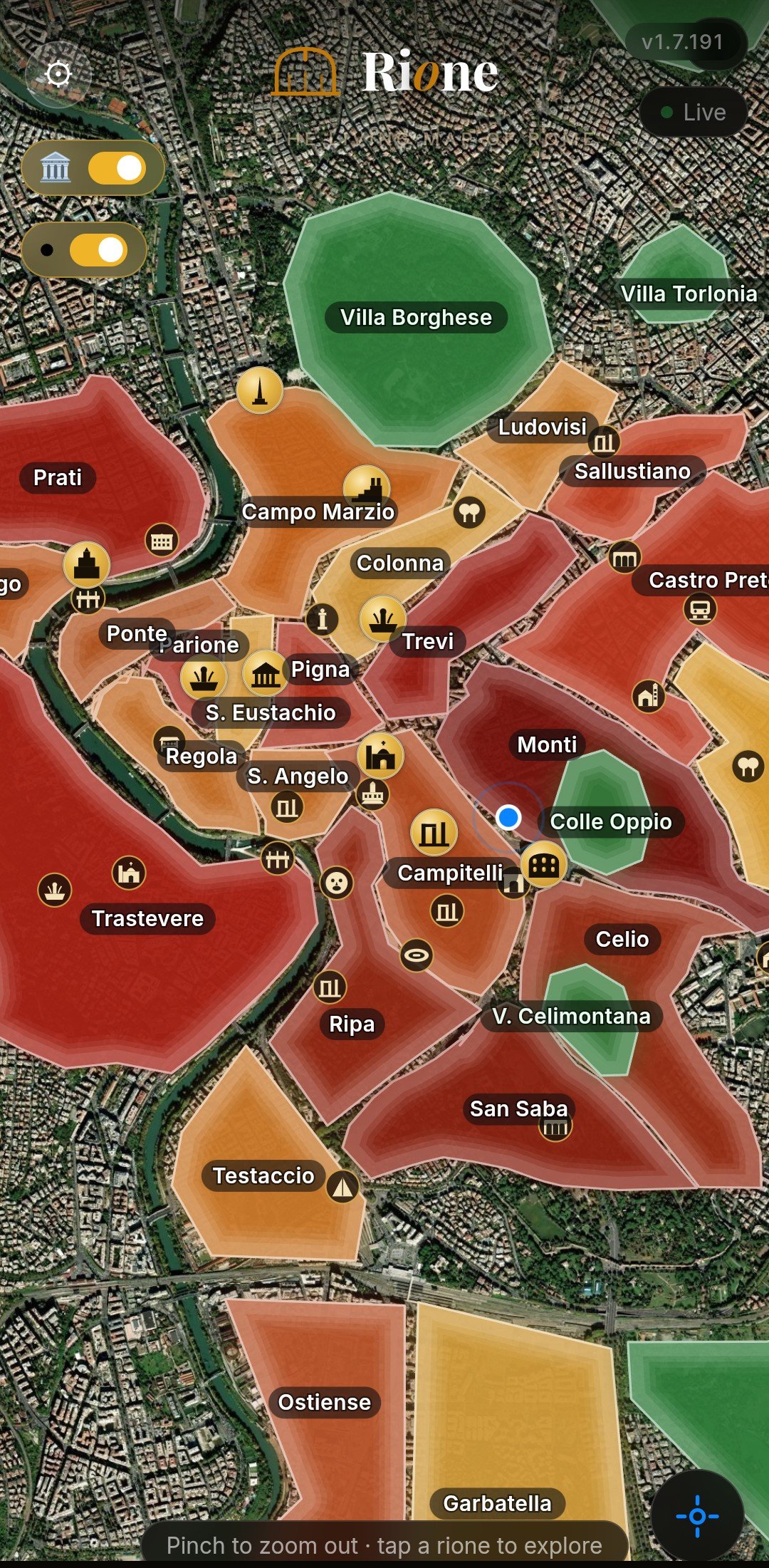
Interactive rioni map of Rome
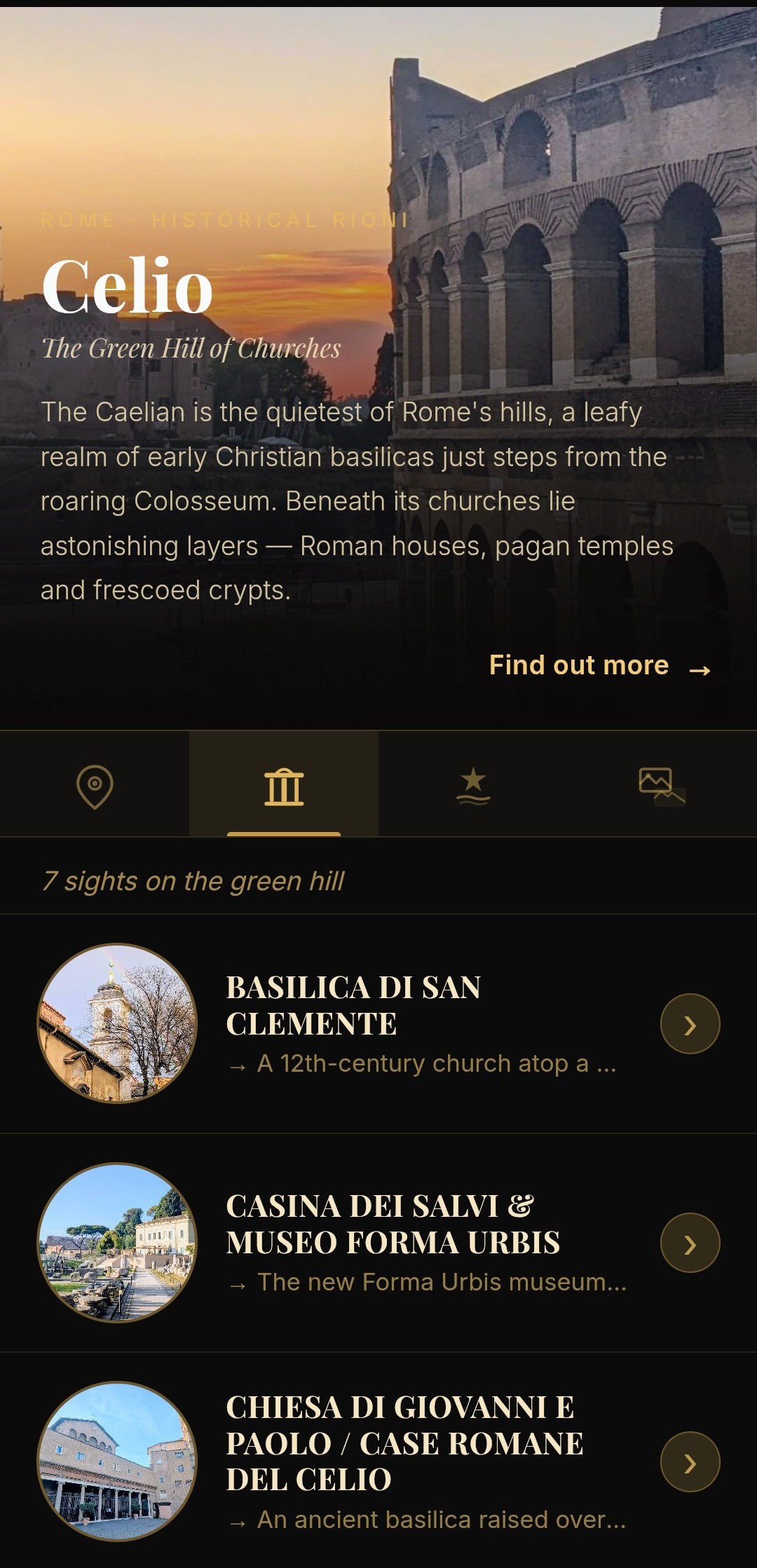
Rione guide with monuments and history

Custom rioni mapping

Dynamic, interactive boundaries of all of Rome’s historical rioni, colour-coded and tappable.

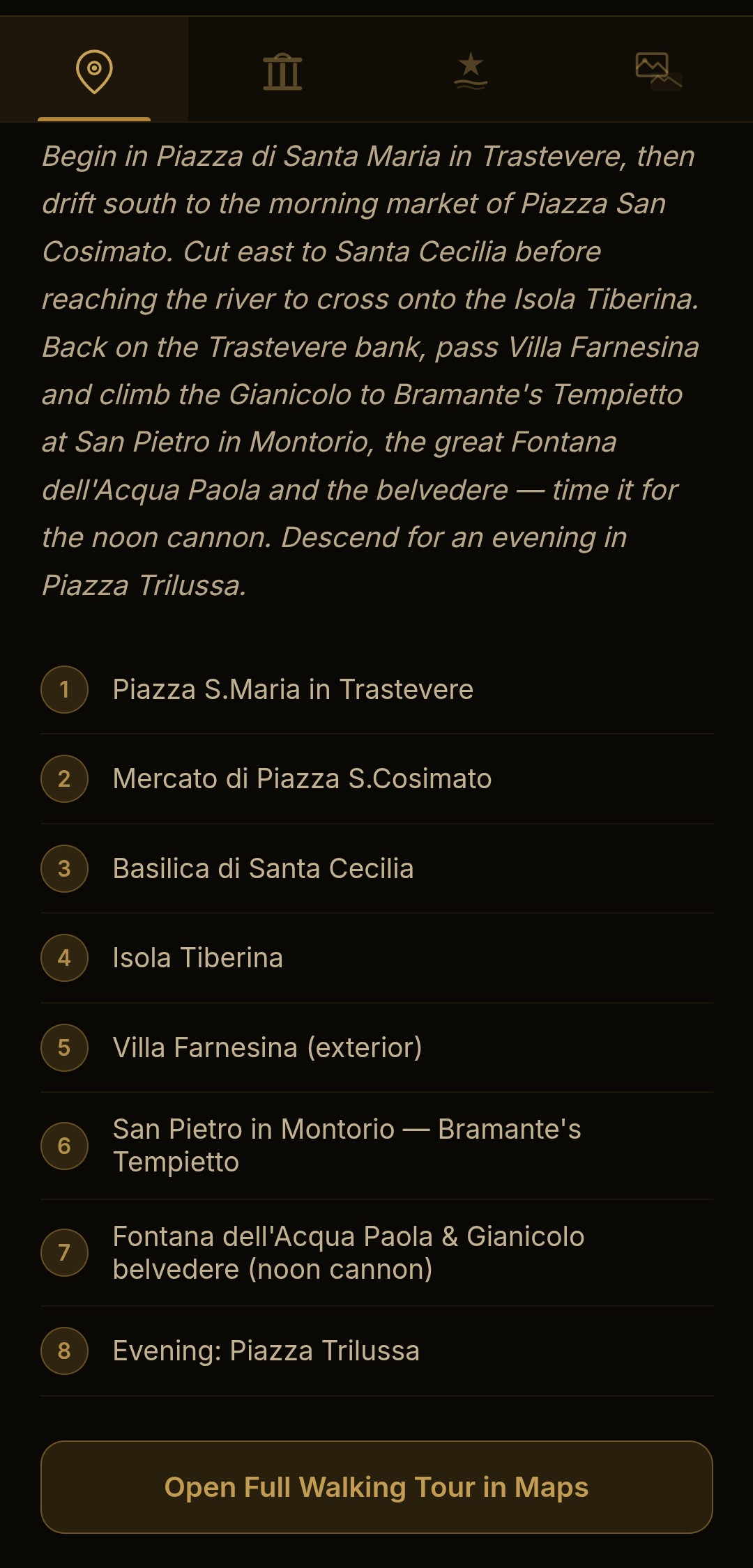
GPS walking tour route
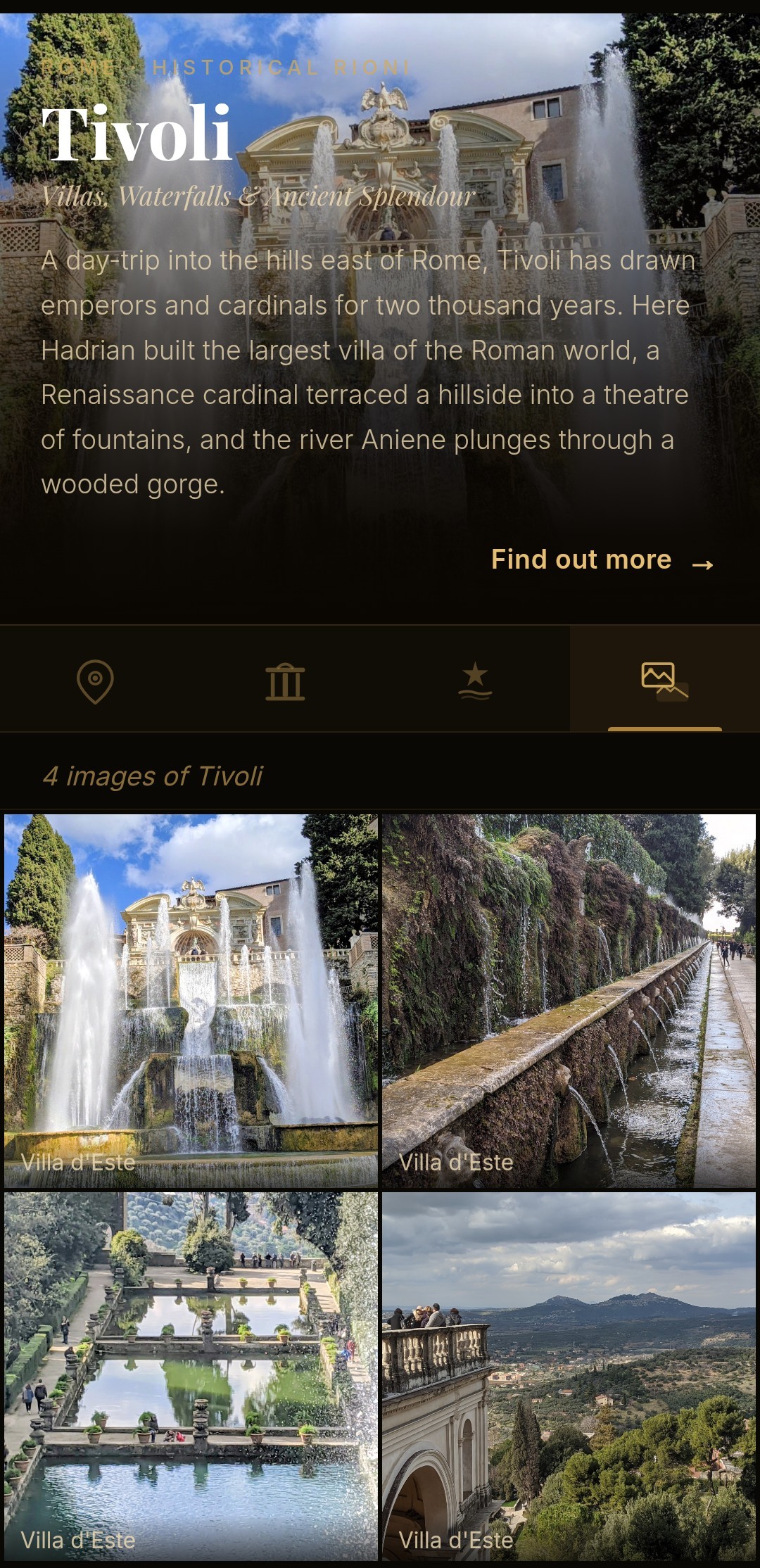
Photo gallery of a Rome day-trip

Authentic sights

Every monument with photos, history and the stories beneath the stones.

What to see Castro Pretorio

7 sights

Palazzo Massimo alle Terme
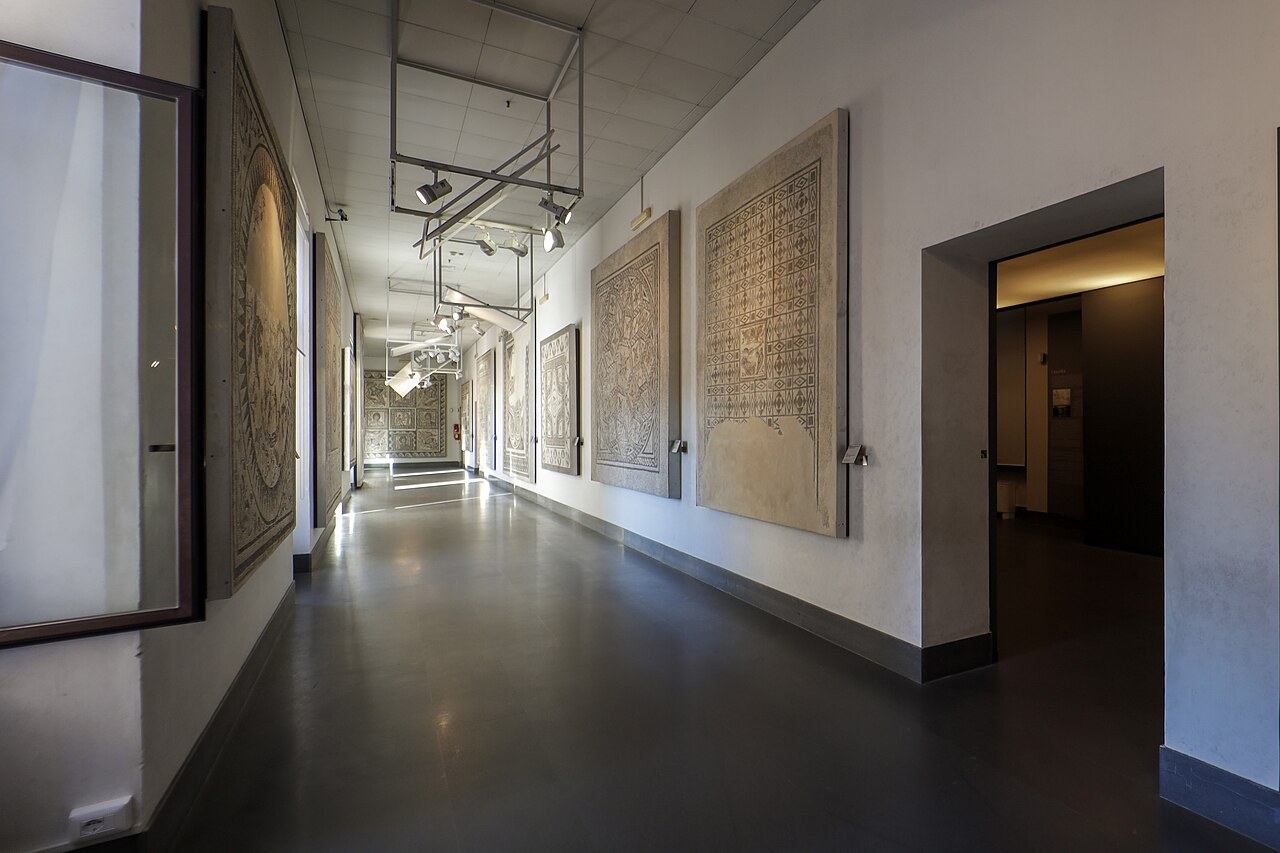
Palazzo Massimo alle Terme

Behind a sober 19th-century façade near Termini station hides one of the greatest collections of classical art on earth, a principal seat of the Museo Nazionale Romano. Most visitors rush past it on the way to the Colosseum, which is precisely why its rooms are so calm.
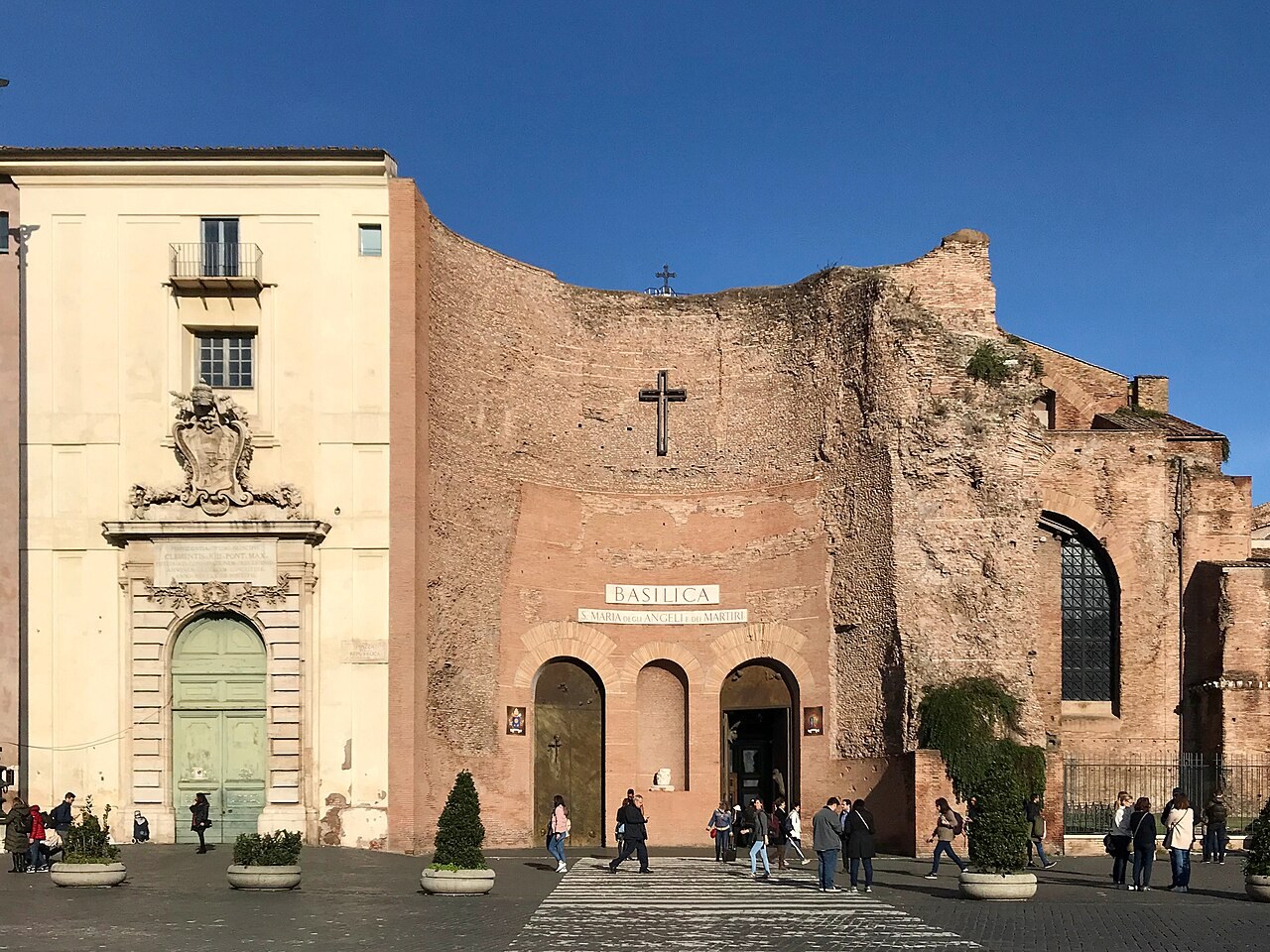
Santa Maria degli Angeli

Santa Maria degli Angeli

This is a church built inside a ruin. Its vast interior is the surviving frigidarium — the cold-bath hall — of the Baths of Diocletian, the largest bathing complex ancient Rome ever built, completed around 306 AD. In 1561 Pope Pius IV commissioned the elderly Michelangelo to convert the colossal vaulted space into a basilica honouring the Christian slaves said to have died building the baths.

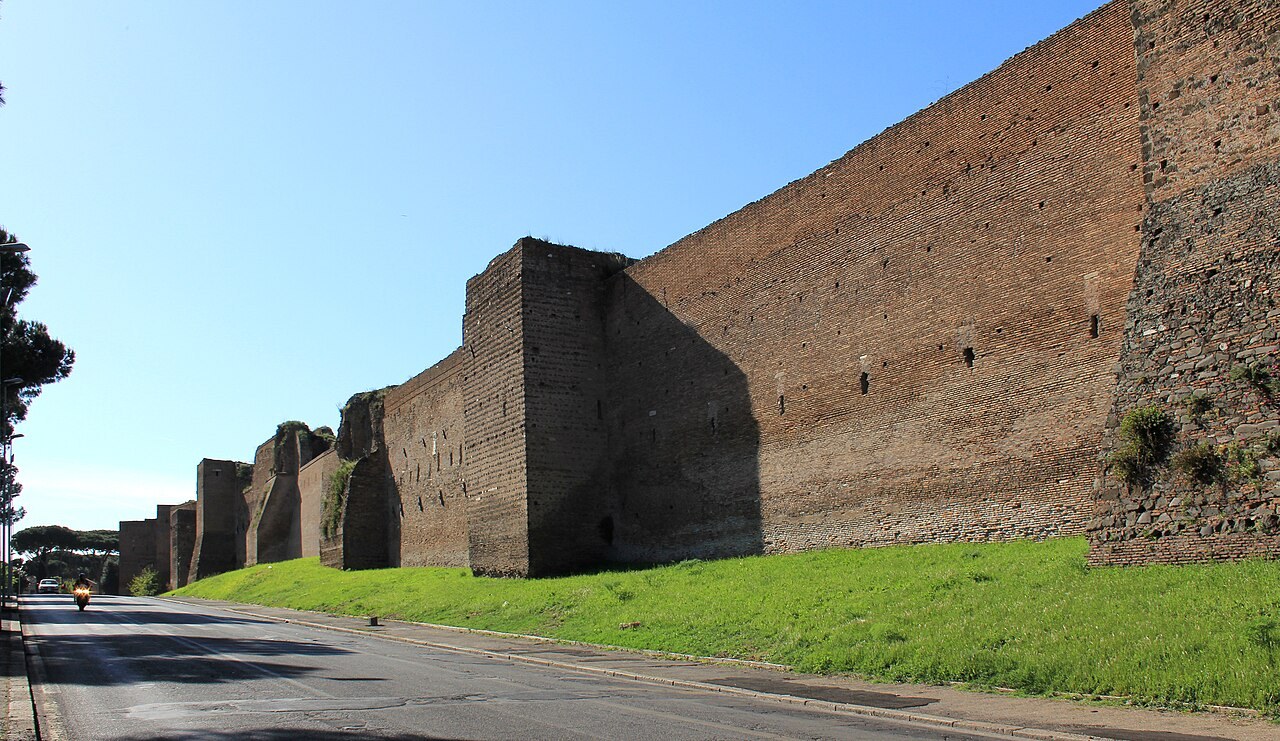
The Aurelian Walls

The Aurelian Walls

For three hundred years Rome had felt no need of walls — the empire's frontiers were its defence. That confidence ended in the 270s AD, when barbarian raids reached Italy and the emperor Aurelian threw a 19-kilometre brick circuit around the city in a frantic decade, even building houses, tombs and aqueducts straight into the new ramparts to save time.

Buy tickets · Tiqets ›i

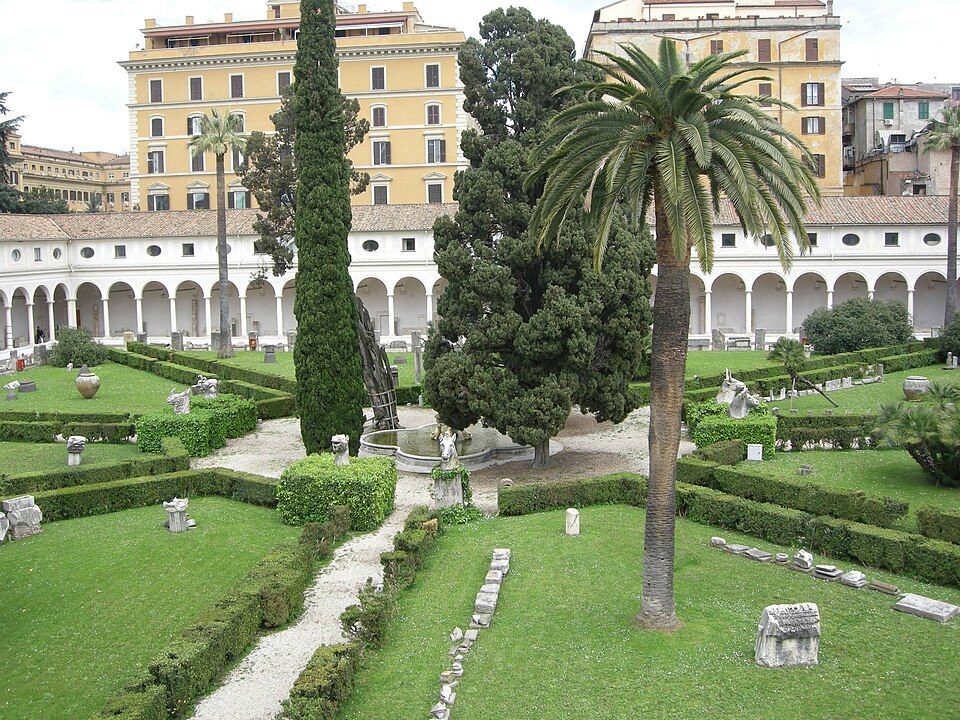
Terme di Diocleziano

Terme di Diocleziano

The largest baths ever built in Rome, completed around 306 AD, could take some 3,000 bathers at once across a complex sprawling over what is now a whole quarter near Termini. Their gigantic halls were a city of leisure — hot and cold pools, gymnasia, libraries and gardens — and their sheer scale still governs the shape of the streets and squares laid over them, from the curve of Piazza della Repubblica to the church carved from their core.

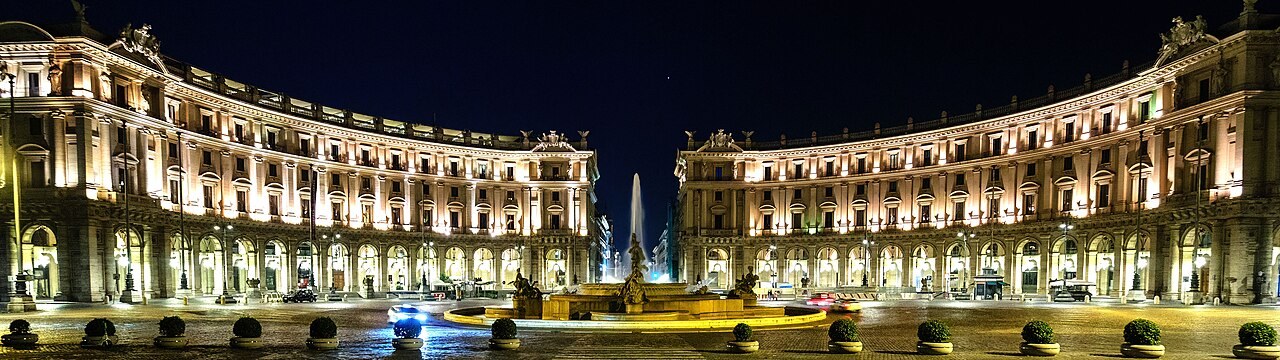
Piazza della Repubblica

Piazza della Repubblica

This grand colonnaded crescent, laid out after Italian unification, is one of Rome's most theatrical squares precisely because it traces the line of an ancient ruin: its sweeping curve follows the great exedra of the Baths of Diocletian, which is why older Romans still call it Piazza Esedra. The matching porticoes, built in the 1880s and 90s, frame the busy meeting of several broad avenues.

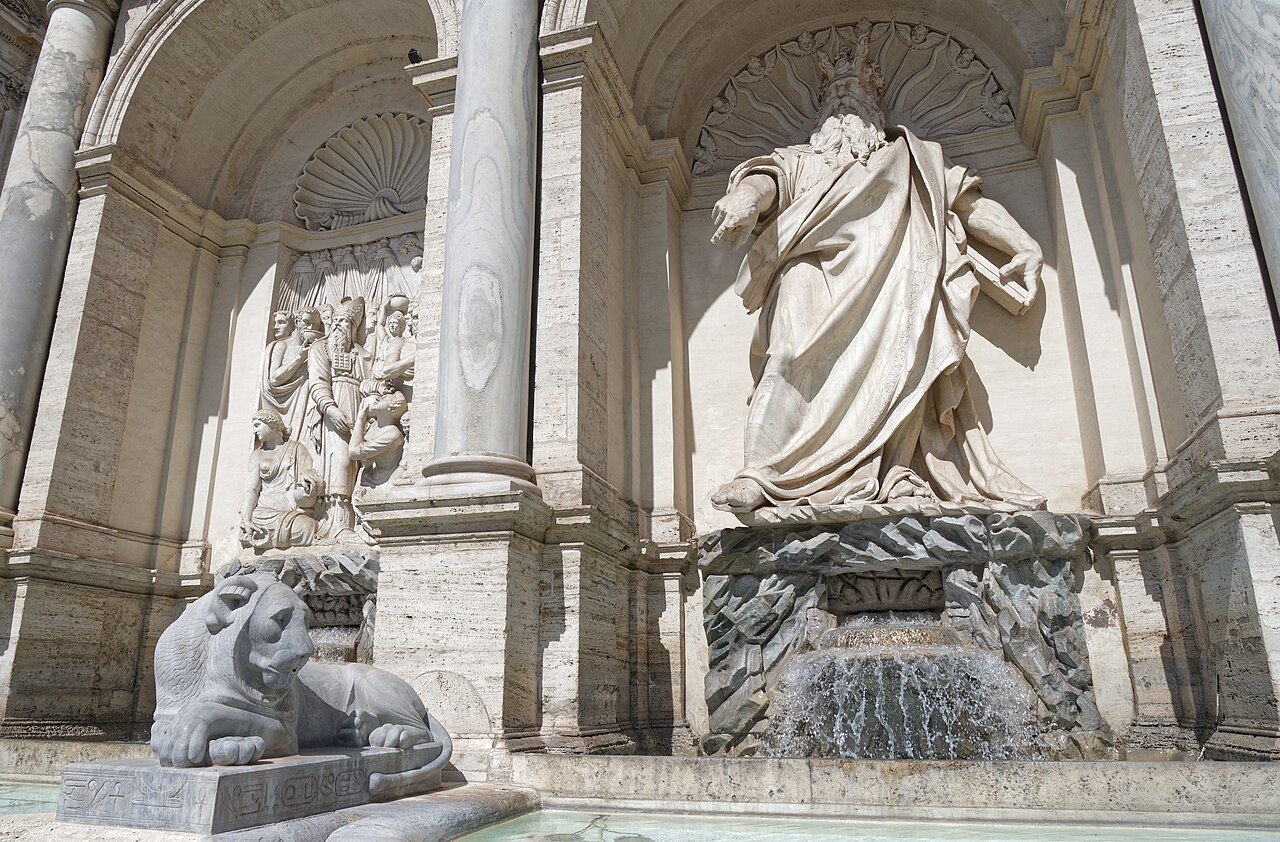
Fontana del Mosè e Santa Maria della Vittoria

Fontana del Mosè e Santa Maria della Vittoria

Two very different masterpieces face each other across Largo Santa Susanna. The Fontana dell'Acqua Felice, known as the Moses Fountain, was built in 1587 to celebrate Pope Sixtus V's restored aqueduct; its central statue of Moses striking water from the rock is so awkwardly proportioned that, legend says, its sculptor died of shame at the ridicule it drew.

Some links below are affiliate links: if you buy a ticket we may earn a small commission, at no extra cost to you.

Local tips & flavours

  • Palazzo Massimo — room 7
  • Servian Wall in Termini
  • Stazione Termini
  • Rifugio Romano
  • Piazza della Repubblica by night
  • Rooftop del Palazzo Naiadi
  • Spa del Palazzo Montemartini
  • Neighbourhood espresso bars

Open the Castro Pretorio guide

Free web appWorks offline in Rome
GPS · maps · audio · 5 languages
Open the Castro Pretorio guide

Explore more of Rome