🏛
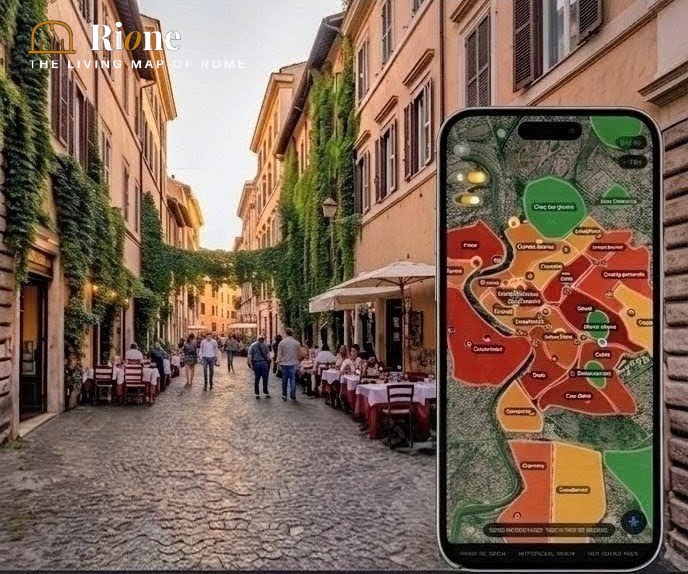
Explore Campo Marzio's monuments and local tips insideRioneThe Living Map of Rome
Open the interactive guide
Rione — explore Rome's rioni
ROME · LIVING RIONI

Experience Roman life like Romans do. Discover the rioni.

Uncover the city’s living history. Rione maps Rome’s ancient quarters dynamically — unlocking subterranean layers, hidden stories and local secrets right where you stand.

Open the free Campo Marzio guide →

Inside the Rione app

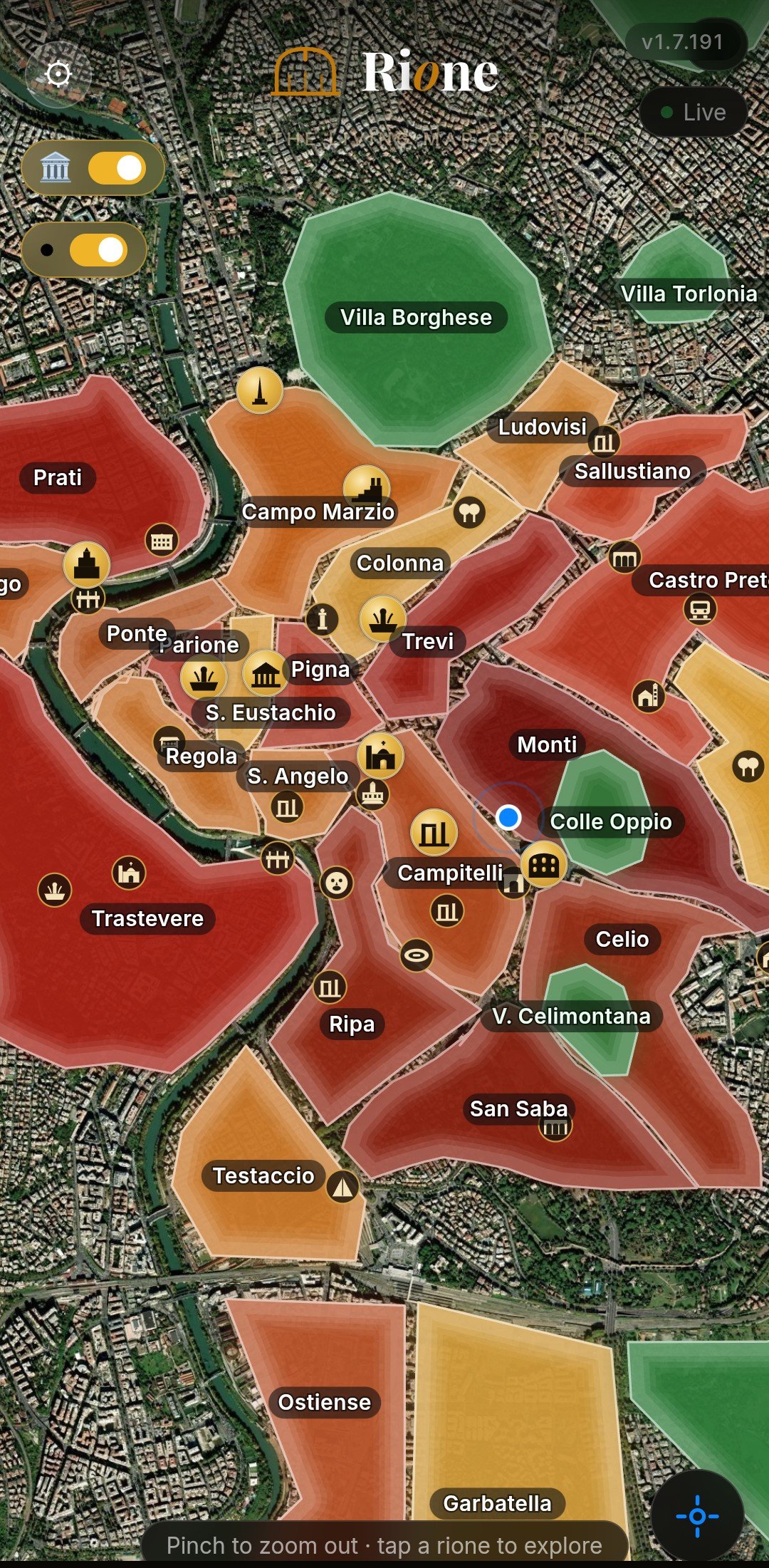
Interactive rioni map of Rome
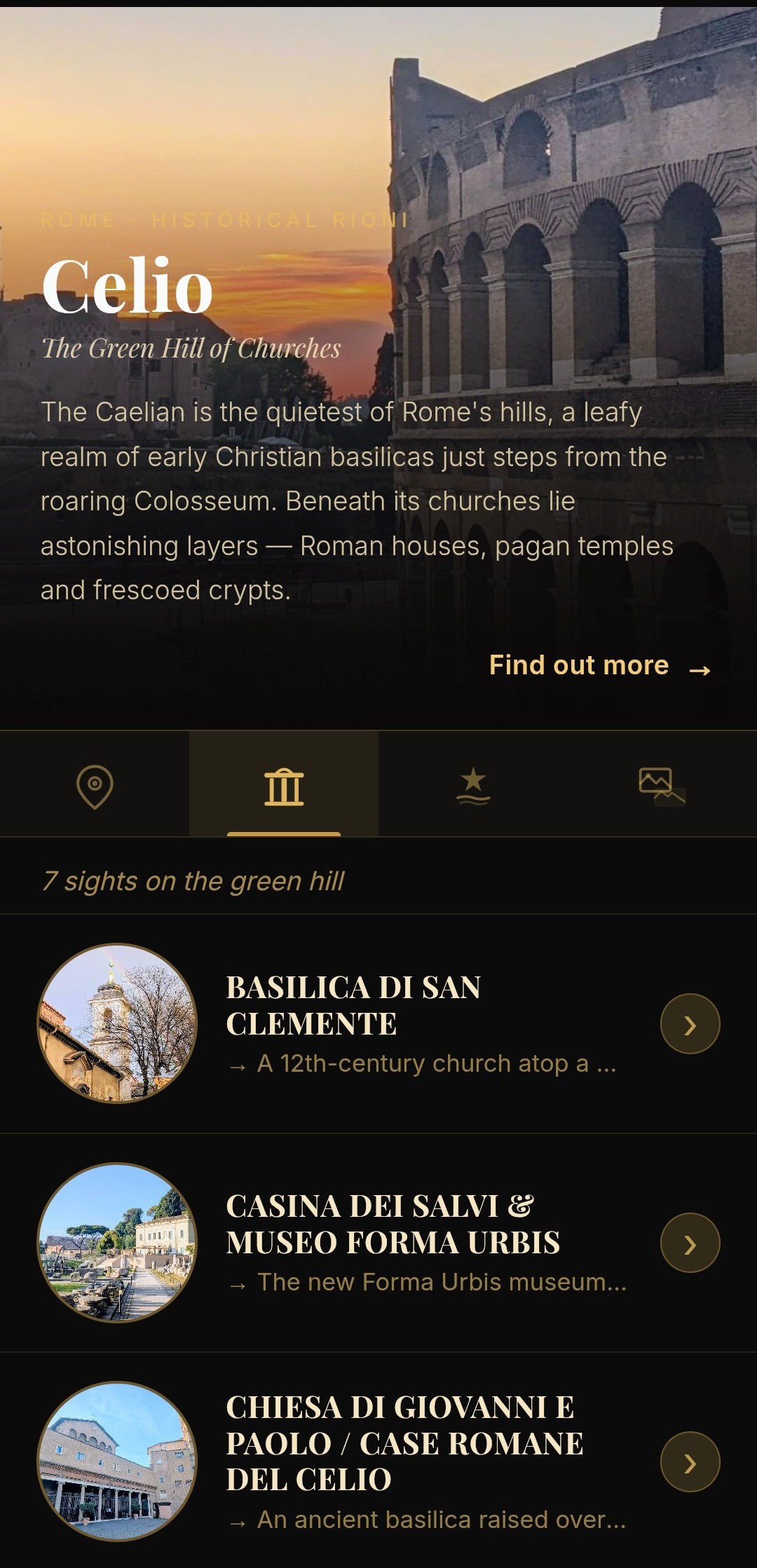
Rione guide with monuments and history

Custom rioni mapping

Dynamic, interactive boundaries of all of Rome’s historical rioni, colour-coded and tappable.

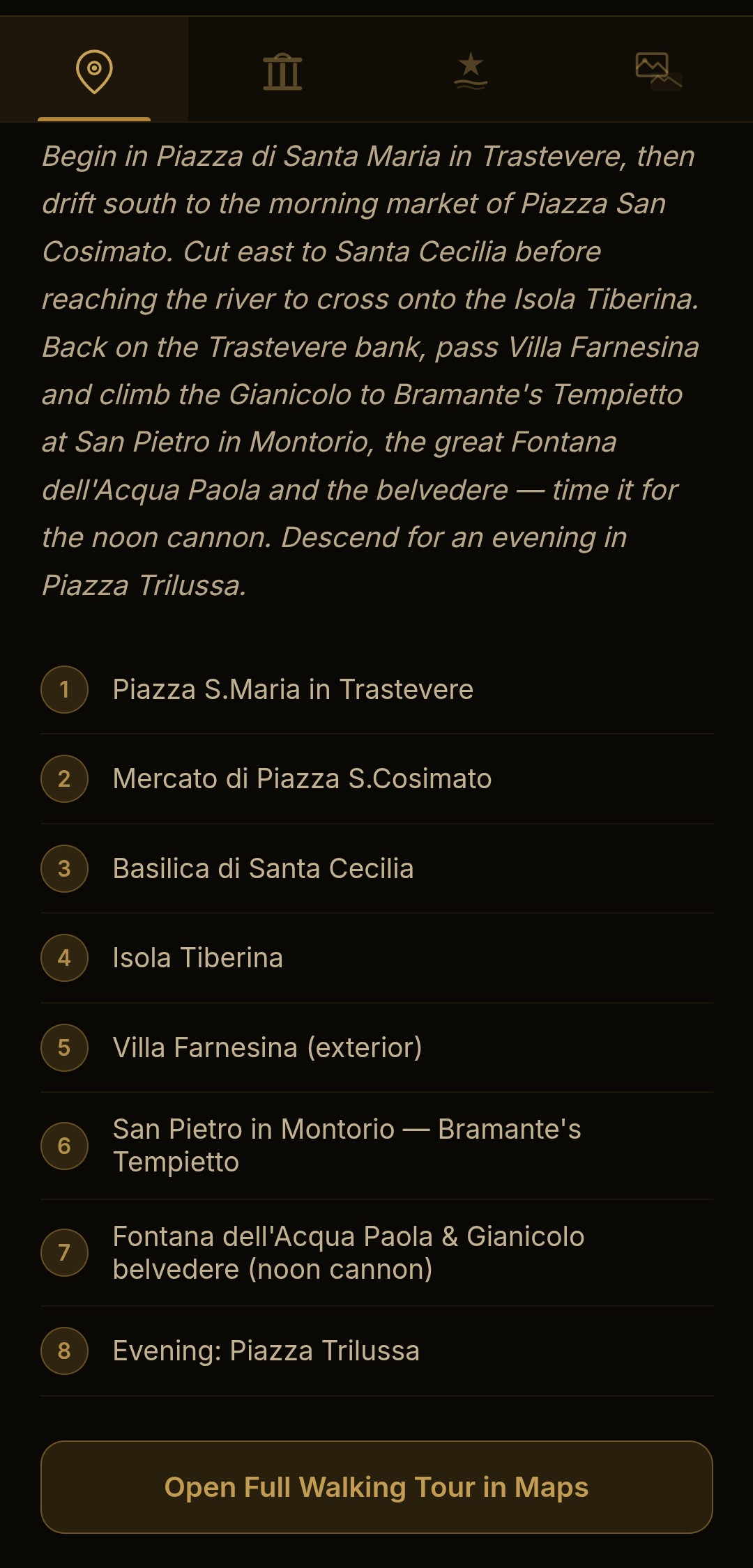
GPS walking tour route
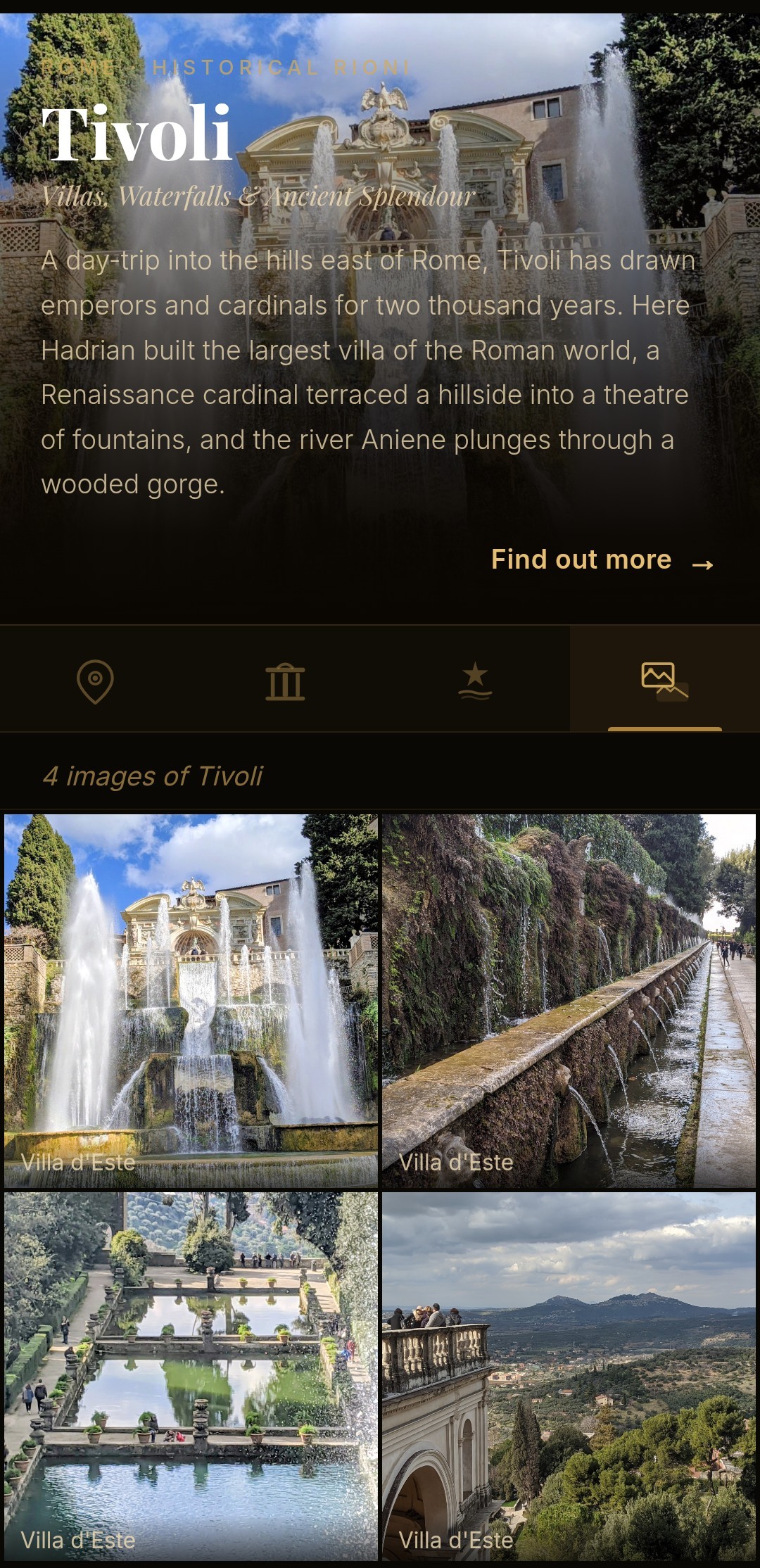
Photo gallery of a Rome day-trip

Authentic sights

Every monument with photos, history and the stories beneath the stones.

What to see Campo Marzio

3 sights

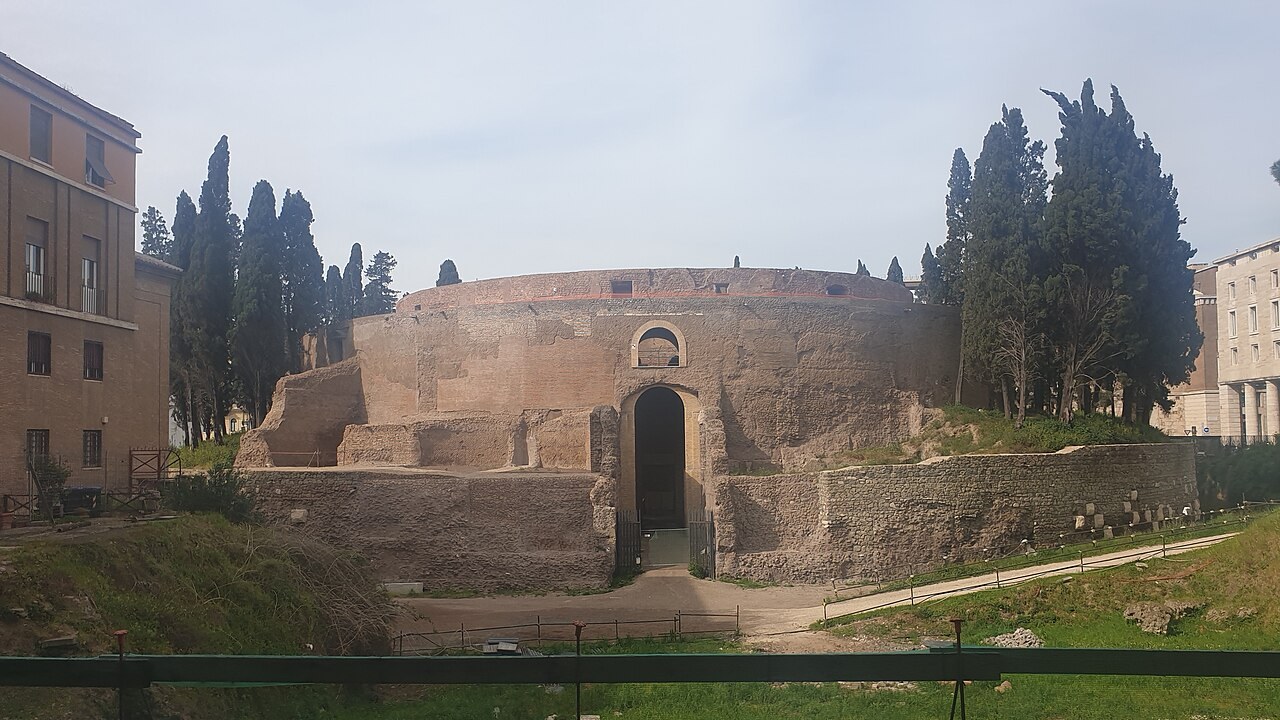
Mausoleo di Augusto

Mausoleo di Augusto

Augustus began his own tomb in 28 BC, while still a young man consolidating power — a colossal circular drum of earth and travertine, 90 metres across, planted on top with cypresses and crowned by a bronze statue of the emperor. Inside, the ashes of the imperial family were laid in chambers around a central pillar that once bore the "Res Gestae", Augustus's first-person account of his own achievements.

Buy tickets · Tiqets ›i
Piazza del Popolo

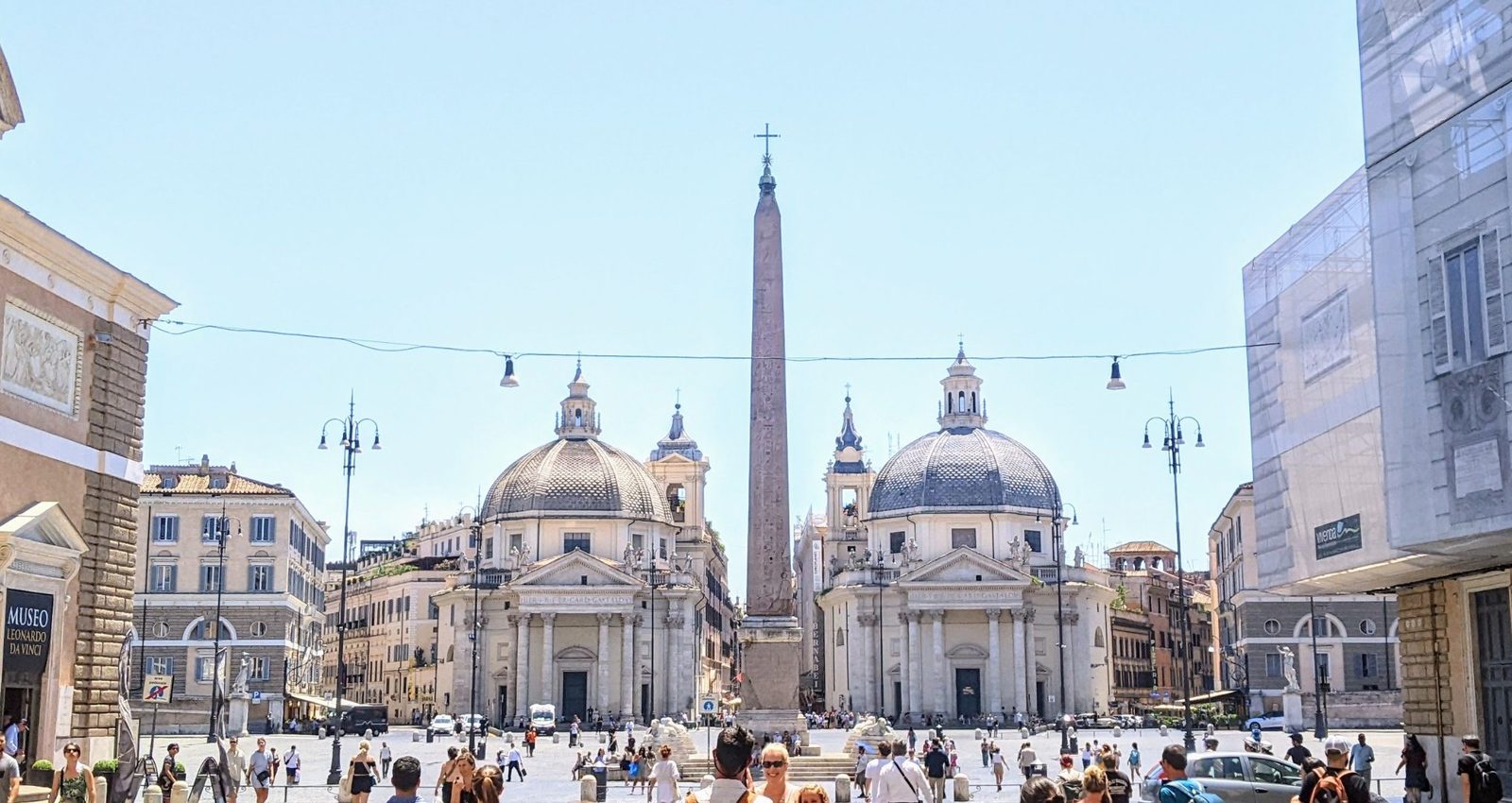
Piazza del Popolo

For travellers arriving from the north along the Via Flaminia, this vast oval was their first sight of Rome — the grand vestibule of the city. At its centre stands the Flaminio Obelisk, carved in Egypt for Pharaohs Seti I and Ramesses II around 1300 BC, brought to Rome by Augustus to decorate the Circus Maximus, and re-erected here in 1589.

Scalinata di Trinità dei Monti

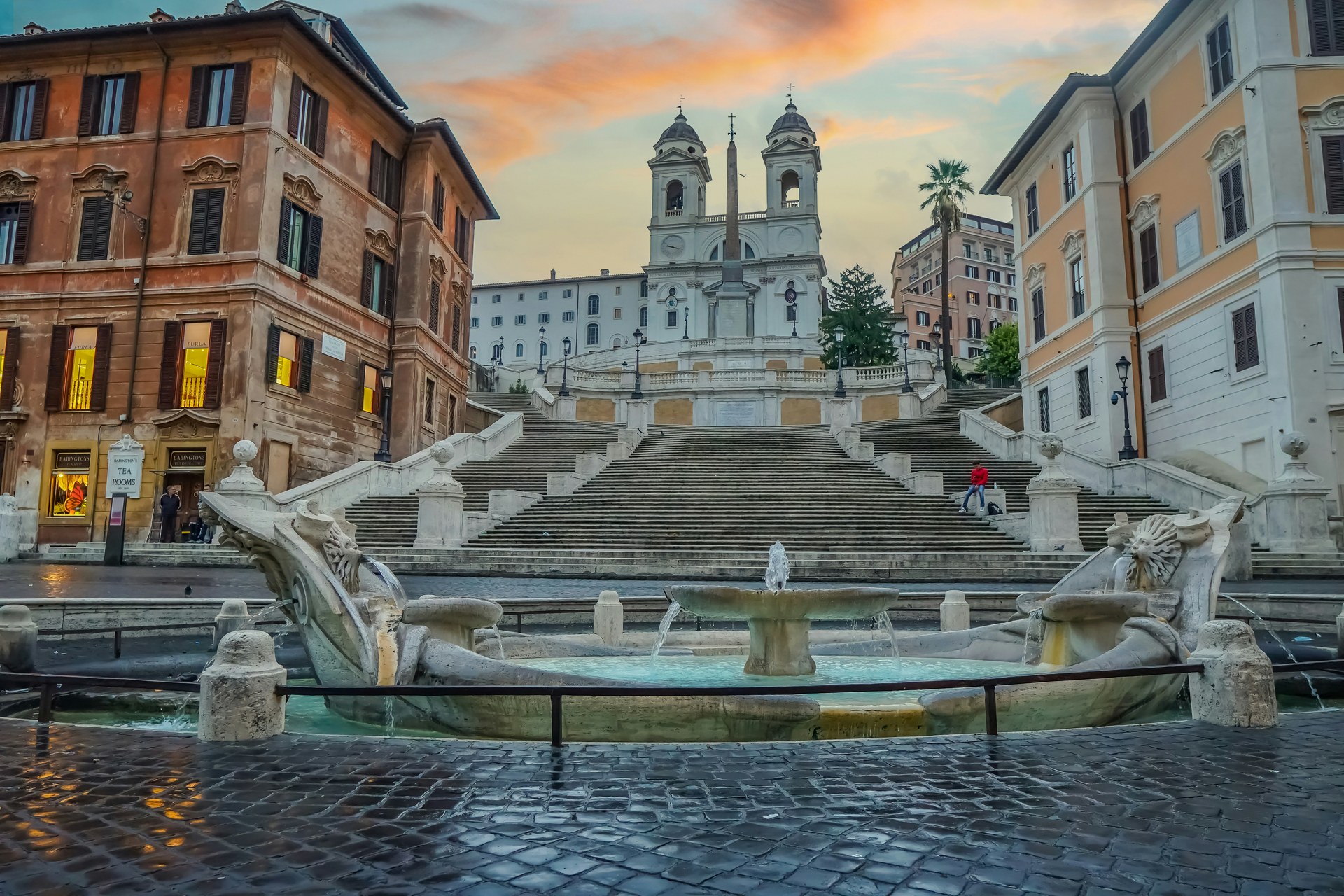
Scalinata di Trinità dei Monti

The Spanish Steps are misnamed — they were paid for by the French. For decades the steep slope below the French-owned church of Trinità dei Monti was a muddy embarrassment; the dispute over how to monumentalise it (the French wanted an equestrian statue of Louis XIV, the popes objected) dragged on until 1725, when Francesco de Sanctis finally built the cascade of 135 steps that flows and divides like a Baroque stage set.

Some links below are affiliate links: if you buy a ticket we may earn a small commission, at no extra cost to you.

Local tips & flavours

  • Pincio at sunset
  • Caffè Canova-Tadolini
  • Ara Pacis by Meier
  • Via Margutta
  • Via dei Condotti & Via del Babuino
  • Passeggiata along Via del Corso

Open the Campo Marzio guide

Free web appWorks offline in Rome
GPS · maps · audio · 5 languages
Open the Campo Marzio guide

Explore more of Rome